Key Takeaways
- –>Be prepared: A well-stocked travel first aid kit is one of the most important things you can pack for any trip abroad.
- –>Tailor your kit: The contents of your first aid box should be adapted to your destination, trip length, and personal health needs.
- –>Get vaccinated first: Alongside your kit, make sure your travel vaccinations are up to date before you depart.
- –>Carry prescriptions: If you take regular medication, ensure you have enough supply for the duration of your trip plus a few extra days.
- –>Expert advice available: Murray’s Pharmacy offers full travel health consultations to help you prepare comprehensively.
- –>Conveniently located: Easily accessible from Islington, Shoreditch, Dalston, and across East and North London.
Why a Travel First Aid Box Matters
Falling ill or sustaining a minor injury while abroad is far more common than most travellers anticipate. From sunburn and stomach upsets to insect bites, cuts, and blisters, even a seemingly straightforward holiday can throw up unexpected health challenges. In many destinations, pharmacies may not stock familiar brands, language barriers can complicate purchasing the right product, or medical facilities may simply be too far away to reach quickly.
The NHS travel health guidance recommends that all travellers prepare a personal medical kit before departure, and that its contents should reflect the specific demands of your destination and activities. A compact, well-organised first aid box is not about being overly cautious. It is about making sensible, practical preparations so that minor health issues do not become major disruptions to your trip.
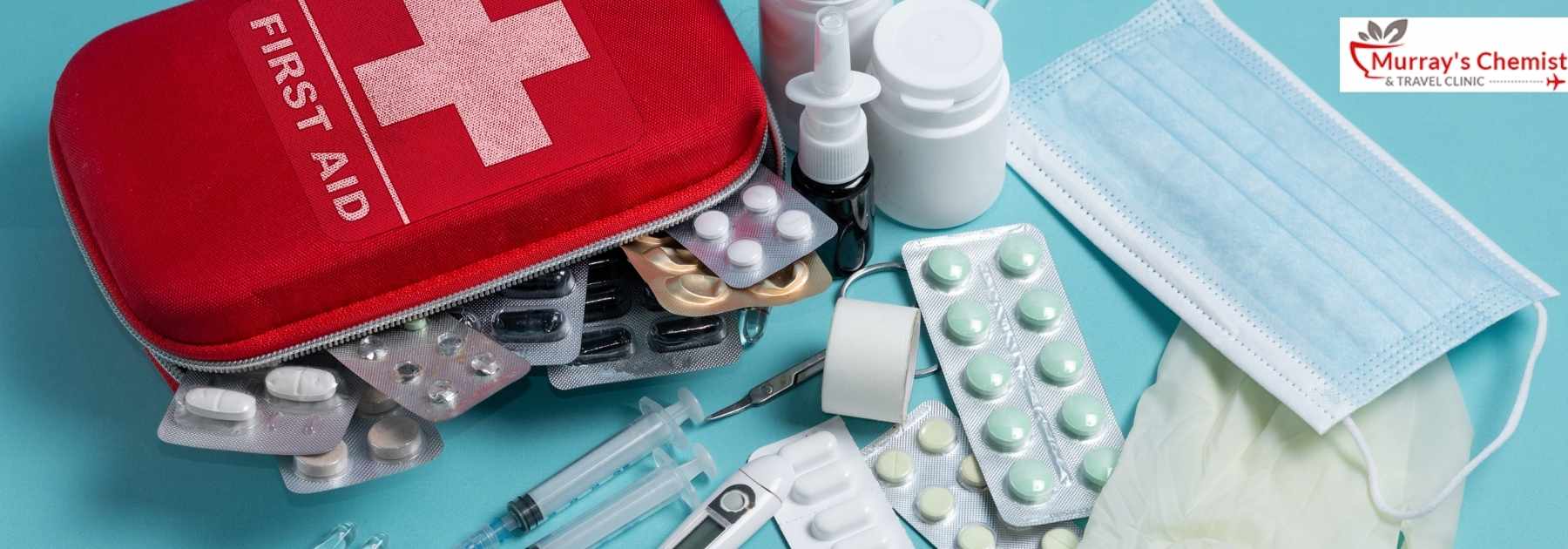
What to Pack in Your First Aid Box for Travelling
The ideal travel first aid kit balances being comprehensive with remaining compact and lightweight. Below is a breakdown of the essential categories to consider when assembling your kit:
| Category | Suggested Items | Notes |
|---|---|---|
| Wound Care | Adhesive plasters (assorted sizes), sterile gauze pads, medical tape, tweezers, small scissors | Waterproof plasters are ideal for beach or outdoor trips |
| Pain and Fever | Paracetamol, ibuprofen | Include child-appropriate doses if travelling with children |
| Digestive Issues | Oral rehydration sachets, loperamide (for diarrhoea), antacids | Essential for travel to regions with a higher risk of traveller’s diarrhoea |
| Skin and Sun | High-factor SPF sunscreen, after-sun lotion, hydrocortisone cream, antihistamine cream | Antihistamine cream helps with insect bites and mild allergic reactions |
| Allergy and Bites | Oral antihistamines, insect repellent (DEET-based for high-risk destinations), bite relief spray | If you carry an EpiPen, always keep it in your hand luggage |
| Travel Sickness | Antiemetic tablets (e.g. promethazine), acupressure wristbands | If you prefer a drug-free option, read our guide on travel bands for motion sickness |
| Hygiene and Infection | Antiseptic wipes, hand sanitiser, disposable gloves, digital thermometer | Particularly important for travel to destinations with limited sanitation |
| Eye and Ear | Saline eye drops, ear drops | Useful for dusty environments, swimming, or long-haul flights |
Our pharmacists are happy to help you source any of the above items and advise on the right products for your specific destination and trip type.
Adapting Your Kit to Your Destination
A travel first aid box for a week in southern Europe will look quite different from one prepared for a three-week trek through South America or East Africa. The destination matters enormously when deciding what to include. If you are heading somewhere with a higher risk of foodborne illness, for example, bulking up on oral rehydration sachets and digestive remedies is sensible. For jungle or rural environments, a more comprehensive wound care kit and strong insect repellent become priorities.
If your destination carries a risk of diseases such as typhoid, ensuring you are vaccinated before you leave is just as important as what you put in your first aid box. Our guide on getting a typhoid fever shot in London covers everything you need to know about who needs it and where to get vaccinated quickly before you travel.
Personal Medications and Prescriptions
If you take regular prescription medication, your travel first aid kit should always include an adequate supply for your entire trip, plus a few additional days in case of delays or unexpected extensions to your stay. Keep all medication in its original packaging, carry a copy of your prescription, and if travelling to countries with strict import rules, check in advance whether your medication is permitted. Our team at Murray’s can help with travel supplies of regular prescriptions and advise on any restrictions relevant to your destination.
Tips for Packing and Carrying Your Travel First Aid Kit
- –>Use a dedicated pouch: A clearly labelled, waterproof bag keeps everything organised and easy to find in an emergency.
- –>Keep it accessible: Store your kit in your hand luggage rather than checked baggage so it is always within reach.
- –>Check liquid restrictions: Gels and liquids in your hand luggage must comply with airline rules. Pack larger bottles in your hold luggage.
- –>Check expiry dates: Go through your kit before each trip and replace anything that has expired since your last holiday.
- –>Share the knowledge: Make sure any travel companions or family members know where the kit is and what it contains.

Frequently Asked Questions
Click on each question below to reveal the answer.
What is the most important thing to include in a travel first aid box?
There is no single most important item, as it depends on your destination and health needs. However, pain relief, wound care supplies, oral rehydration sachets, and any personal prescription medication are priorities for almost every traveller. A digital thermometer is also a highly practical addition that is easy to overlook.
Can I take my travel first aid kit in hand luggage on a flight?
Yes, in most cases. Solid items such as plasters, tablets, and equipment are generally permitted in hand luggage. Liquids and gels must comply with the 100ml rule and be packed in a clear resealable bag. Sharp items such as scissors should be packed in checked baggage to avoid confiscation at security.
Should children have a separate travel first aid kit?
You do not need a fully separate kit, but you should ensure that any medication included, such as pain relief and antihistamines, is available in child-appropriate formulations and doses. Speak to our pharmacists for advice on what to include when travelling with young children.
Do I still need travel vaccinations if I have a good first aid kit?
Absolutely. A first aid kit and travel vaccinations serve entirely different purposes. Vaccinations protect you against serious infectious diseases that a first aid kit cannot treat. Both are essential parts of responsible travel health preparation. Murray’s Pharmacy offers a full range of travel vaccinations with no GP referral needed.
Can Murray’s Pharmacy help me put together a travel first aid kit?
Yes. Our pharmacists are happy to advise on exactly what to include based on your destination, the length of your trip, and any personal health considerations. We can also supply most of the items you need directly from the pharmacy. Book a consultation or pop in to speak to our team.
How far in advance should I prepare my travel first aid kit?
Ideally, at least two to four weeks before departure. This gives you time to source any items you need, arrange prescription supplies, and book any required travel vaccinations, some of which need to be given well in advance of travel to be effective.
Travel Prepared With Murray’s Pharmacy
Assembling the right first aid box for travelling is one of the smartest things you can do before any trip abroad. Paired with up-to-date travel vaccinations, appropriate prescription supplies, and expert advice from our team, it means you can explore with genuine confidence. At Murray’s Pharmacy in Hoxton, we offer everything under one roof: travel health consultations, vaccinations, prescription services, and the products you need to stock your kit properly. Do not leave your health to chance on your next adventure. Book a travel health consultation at Murray’s today.
